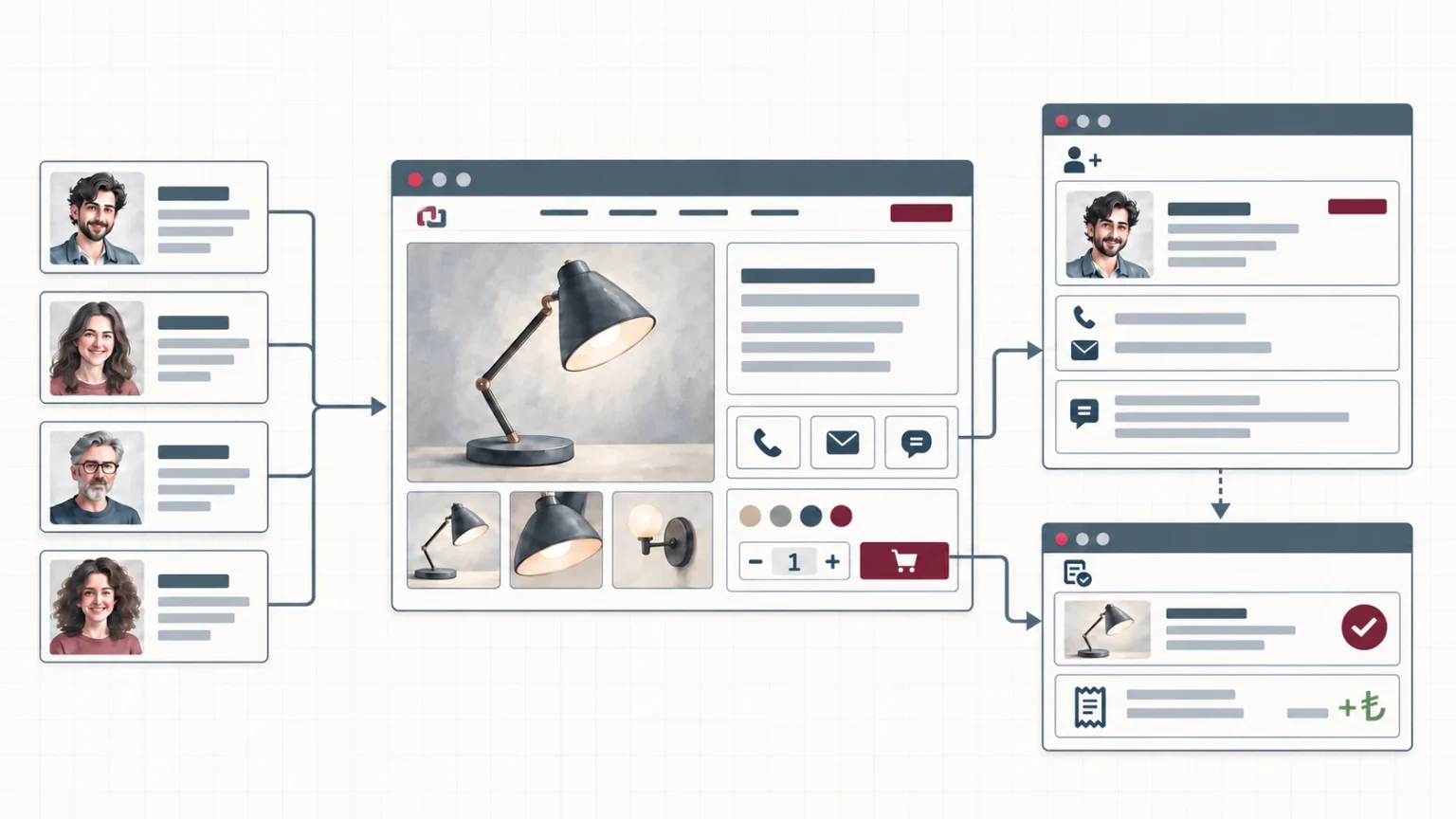
More website visits do not automatically lead to more enquiries, bookings, sales or other expected results. What a visit means depends on the page the visitor reaches and what they do there. If the visitor makes an enquiry, what happens next also matters.
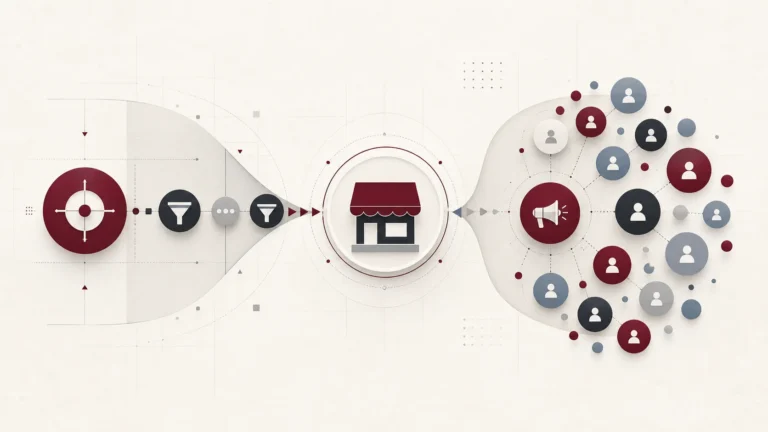
Relevant visit → aligned expectation → appropriate page → action that can be completed → assessed enquiry → business outcome
This sequence does not assume that every visitor follows the same path. It separates the stages at which different outcomes can arise. Website visits may increase while form submissions, calls or booking enquiries remain unchanged. Enquiry volume may rise, yet only a small share may fit the business’s service area and operating requirements. Even a suitable enquiry may not progress because of price, stock, capacity or how it is handled.
What does website traffic tell you?
Traffic data shows how many visits took place on a website during a given period and which pages those visits reached. This helps distinguish between a site receiving no visits and one receiving visits without the expected on-site actions.
The same total can include people arriving for very different reasons. One visitor may be researching a product while another is looking for information about an existing order. Job applicants, people outside the service area and those seeking an answer to one particular question may all appear in the same report.
The meaning of a visit therefore depends on the page it reaches and the purpose of that page.
Should every page be expected to produce the same result?
No. An article may answer a particular question. A service page may explain the scope of the work and direct someone who wants to get in touch. A product page may need to present features, pricing and purchasing terms. A support page may help an existing customer complete an action rather than generate a new enquiry.
Someone researching a general subject may not request a proposal during their first visit. That does not mean the article has failed to do its job. The reader may have found the answer they needed or continued to a relevant service page. If someone arrives looking for pricing, availability or application terms but cannot find them, however, the problem relates directly to the page’s purpose.
Each page should be assessed according to its own role. Finding information, making contact, submitting an application, booking and purchasing are not the same kind of result.
Does the visitor’s need match what the business offers?
The value of a visit does not depend solely on whether it came from an organic or paid source. The product or service the visitor wants must actually be among those the business provides. Location, timing and any other eligibility conditions can also affect that match.
Visits from outside the service area may increase total traffic without producing service enquiries. People seeking a service for personal use may also find that it is available only to corporate customers. Rather than labelling these visits as inherently “low quality”, the review should identify where the visitor’s need and the business’s terms cease to align.
Search queries, who the advertisements were shown to, the wording used in links, the first pages visitors opened and the enquiries received by the business can all help reveal that gap.
What does the visitor expect to find on the page?
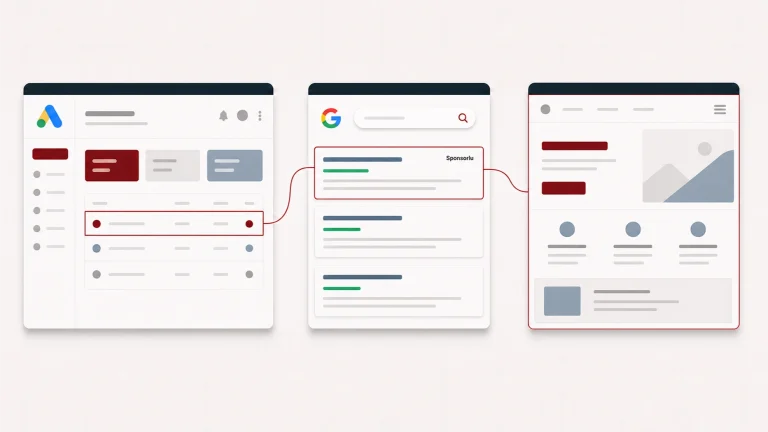
A search-result title, advertisement, email or social media post creates an expectation about what someone will find after opening the link. If the page does not provide the product, service, terms or information the link promised, the visitor may not know whether they have reached the right place.
For example, a link that says “same-day delivery within Ankara” should not lead to a generic logistics page that says nothing about the Ankara service or its terms. The visitor may have to search the site again or leave without finding the promised information.
Not every advertisement or post needs a separate landing page. An existing service or product page can be used when it supports both the message in the link and the relevant action. The decision depends on the fit between the expectation created by the link and what the page provides, not simply on the type of page. How the advertising message relates to the next step is also discussed in Google Ads or Meta Ads? Which Is Better for Your Business?.
Does the page help visitors decide and take the next step?
Once visitors reach the relevant page, they first need to understand whether the product or service is suitable for them. If it is, they should be able to complete the relevant contact, application, booking or purchase action.
Can visitors find the information they need to decide?
The information required depends on the product or service. Its scope, intended customer groups and service areas, how the process works, timing, pricing approach and application terms may all affect the decision.
Not every detail has to be published openly. A page that does not explain the basic conditions, however, may generate enquiries the business cannot serve or cause suitable visitors to leave without making contact. The information shown should be based on how the business operates and what customers genuinely need in order to decide.
Can visitors complete the relevant action?
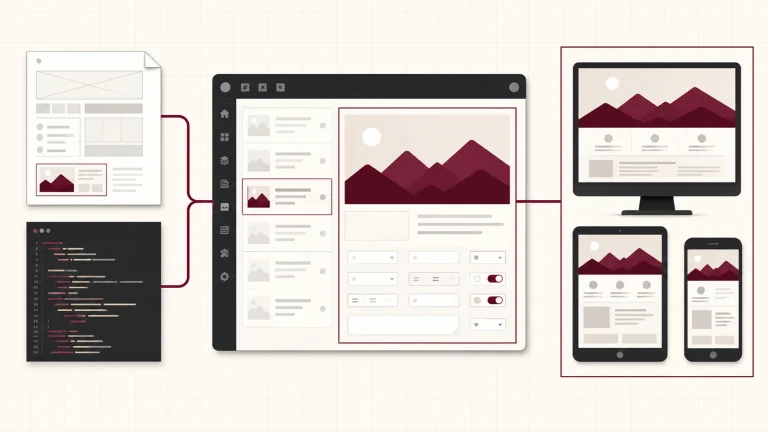
Even when the information is sufficient, a phone link, form, booking facility or purchasing step may be missing or unusable. The action should fit the page’s content and work on the device the visitor is using.
The main points to check are:
- Is the available action easy to find on the page?
- Can the phone, form, booking or purchasing function be used across different screen sizes?
- Are the requested details and form fields clear?
- If an entry is invalid, does the site explain what needs to be corrected?
- Once the action is complete, does the site confirm that the record was received and explain what happens next?
Not every form needs to be as short as possible. If a proposal or application cannot be assessed without detailed information, more fields may be appropriate. Before counting the fields, consider why each piece of information is requested, whether the form is clear and whether completion is confirmed properly.
The technical foundation for mobile use, performance, accessibility and forms is explained in more detail in What Is an SEO-Friendly Website?.
Why is an on-site action not the final result?
A form submission, an incoming phone call or a booking request may be an important outcome for the business. These actions often begin another assessment or operational process rather than completing it.
The scope of a proposal request may need to be reviewed. A booking may have to be matched to an available time, or an order prepared according to stock and delivery conditions. The website can collect the required information, create a record and pass it to the appropriate person. Whether the business can accept the enquiry, how quickly it responds and what happens next all depend on steps beyond the website.
No enquiries, a high proportion of unsuitable enquiries and suitable enquiries that do not progress point to different stages of the process.
Where should the review begin when results fall short?
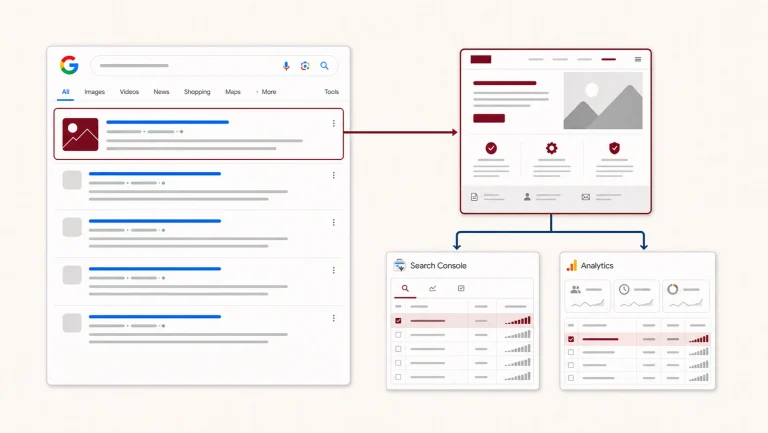
The review can begin by placing traffic reports, actions completed on the website and the business’s own records of outcomes side by side for the same period. The first information to compare depends on the situation being observed.
| What is happening? | Information to compare first |
|---|---|
| Visits are increasing, but the expected on-site actions remain unchanged | The search or message that brought the visitor, the landing page, the page’s purpose, available actions and measurement records |
| An action begins but is not completed | Form or purchase steps, requested information, error messages, use across devices and technical behaviour |
| Enquiry volume is increasing, but the number of suitable enquiries is not | Searches, the audiences targeted by advertisements, link wording, service terms and the information collected during the enquiry |
| Suitable enquiries arrive, but no sale, confirmed booking or other expected business result follows | Response and follow-up process, price, proposal, stock, schedule and capacity |
| The business receives enquiries, but they cannot be related to traffic reports | Measurement setup, phone and form records, system connections and the date ranges being compared |
Several issues may exist at the same time. Irrelevant visitors may be directed to the wrong page while the form on that page also fails to work. The website may pass an enquiry to the right person, yet the enquiry may not be recorded or followed up consistently within the business.
Some visitors return through different channels before deciding. Some actions are completed by telephone or in person. Visits in analytics reports should not therefore be expected to match the business’s records one for one in every case.
When can more traffic help?
If relevant visitors reach the right pages and can complete the important actions, traffic volume can be considered in its own right. When there are not enough relevant visits, the business may consider improving organic visibility, using advertising or bringing in visitors through other sources.
If visitors are looking for a different product, the information promised by a link is absent from the page or essential actions cannot be completed, increasing traffic alone will not resolve those mismatches. The same problems may simply occur across more visits.
This does not mean traffic-generation work must wait until every page and action has been perfected. SEO, advertising, content and website work can run during the same period when appropriate. What matters is distinguishing the problem each activity is intended to address and evaluating its results accordingly.
What decisions can follow from the review?
The review may show that the priority lies in visitor relevance, the information on a page, action steps, measurement setup or what happens after an enquiry. The appropriate response might be to attract more relevant visits, improve the information on particular pages, fix an on-site action, connect the required measurement systems or change the business’s internal follow-up process.
These options do not have to be alternatives. The information and form on a page may be revised while advertising targeting changes or work on organic visibility continues during the same period. The scope depends on where the problem occurs and how the relevant stages affect one another.