A website does not have to reach a particular age before there is a reason to change it. It may no longer describe the business’s current services or support essential actions. Its content may be inefficient to manage, or the business may want to change how it is presented visually. Whether the need can be met through a limited change or requires a new website project cannot be determined until the existing site has been reviewed.
A website that has been live for years may still do everything the business needs it to do. A site launched only a few months ago may already be inadequate if the business has changed or its original structure did not suit the way the business operates. Time since launch is not enough on its own to make the decision.
Does a website need to be rebuilt after a certain number of years?
No. There is no fixed rebuild cycle that applies to every business. The decision depends less on how long the website has been live than on whether it still serves its purpose and supports the changes now required.
New design trends do not automatically make an existing website obsolete. If its pages still present the necessary information clearly, visitors can complete important actions and the content is easy to manage, there may be no need for a new website simply because time has passed.
A recently built website can still fall short. Adding a new type of content may require technical support every time. Visitors may be unable to complete an important action on a mobile device, or the system may not support the business’s new way of working. A recent launch does not remove these shortcomings.
Even a website that appears to work correctly for visitors can become difficult to sustain technically. Its software or components may no longer receive updates or technical support. Its structure may also become incompatible with current browsers, devices, server environments or connected services. Waiting for a visible failure may not be the right approach. Whether replacing the affected component alone would solve the problem depends on how that component connects to the rest of the system.
Does the content also have to change during a website rebuild?
No. Rebuilding a website does not mean rewriting all of its copy or replacing all of its images. Accurate, up-to-date content can continue to be used on the new website.
Writing and editing content are editorial tasks. Content created to improve search visibility may form part of SEO work. Editorial and SEO content work can take place alongside a website project, but they are not automatically included in its design or development scope. Responsibility for the content and the material that will change should be defined separately.
Moving existing content into a new system is also different from creating new content. If the content is stored in a suitable data structure, it may be transferred through a technical migration. If a direct transfer is not possible, copy, images and files may need to be moved manually into the new system, or the data may need to be reformatted before it can be migrated. The proposal should list content creation, content entry and data migration separately.
What counts as a visual change, and what counts as a technical change?
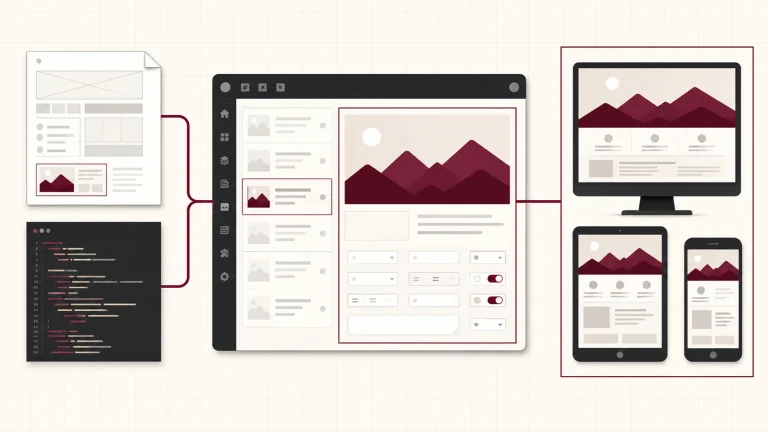
Visual design covers colours, typefaces, imagery, page layouts and the interface used by visitors. The technical structure is not limited to the administration panel or systems running behind the scenes. It also includes the templates and front-end code that render the pages, the way content is stored, forms, connections with other systems and server requirements.
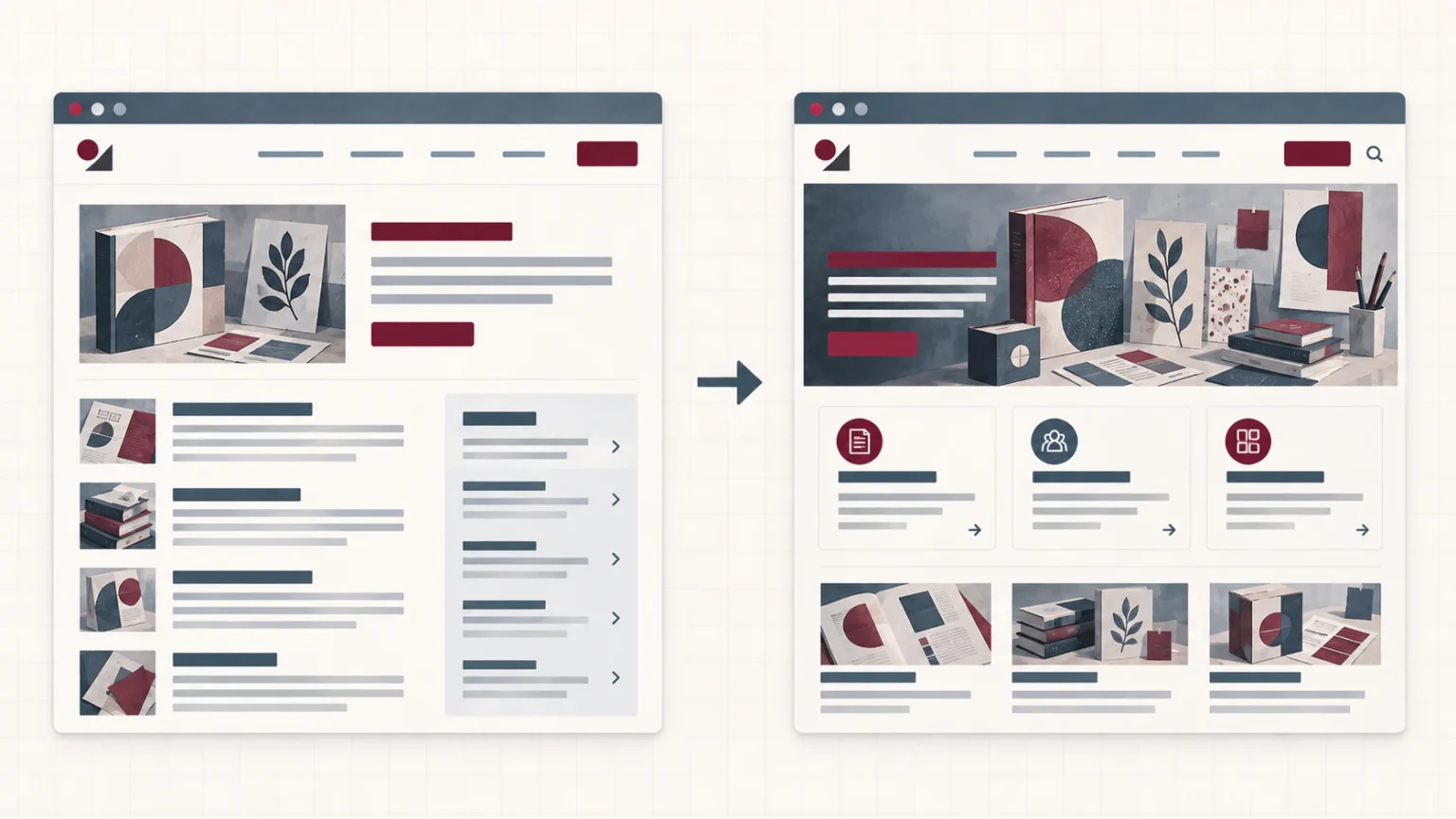
The two areas do not have to change to the same extent. A website’s technical structure can be rebuilt while the design seen by visitors remains the same. Conversely, the visual design can change completely while the content structure and much of the existing functionality are retained.
A visual change that appears limited does not guarantee that the technical work will also be limited. On a website built with shared templates and centrally managed styles, colours and typography may be changed within the existing structure. If the pages were built independently, the same visual change may require each page to be edited separately or the front end to be redeveloped.
Different providers use terms such as “update”, “refresh”, “redevelopment” and “rebuild” in different ways. The important question is therefore not what the project is called, but what work will be carried out on the content, visual design, functionality, technical structure and migration.
What can prompt changes to an existing website?
The need to change a website does not usually begin as a request for an entirely new site. What the business offers or how it operates may have changed. Existing processes may have become inefficient, or the website may no longer do what the business needs it to do.
When the business changes what it offers or how it works
A new product, service, customer group or business process may require more than another page. The related information may need to be entered regularly, categorised, published or incorporated into another process.
If the existing system supports shared fields, listings and the required workflow, the new requirement may be added to it. If a separate page must be built manually for every item, or the information cannot be connected with other operations, the issue lies in the system’s capabilities rather than a missing page. A technical review shows whether the requirement calls for a new content type, a specific function or wider development work.
When visitors cannot find the right information or complete the intended action
Visitors do not all arrive through the same page or with the same purpose. One person may be looking only for information; another may want to request a proposal, make a booking, purchase a product or contact the business. Visitors do not always follow a linear path through the website. Even so, the navigation, links between pages, order of information and calls to action should help them find what they need or complete the relevant action.
If the website receives traffic but visitors do not begin or complete important actions, the first step is to identify where the problem occurs. Analytics data, search queries, form records, user feedback and a review of the pages themselves can help distinguish between mismatched expectations, missing information, unclear direction and technical errors. A contact link that is difficult to find may be one symptom, but it does not explain the whole problem.
The solution may involve editing the content, changing the page structure, reworking the steps required to complete an action or correcting a technical fault. Traffic that does not produce a result does not by itself mean that the entire website needs to be rebuilt.
When content cannot be managed efficiently in the existing system
Routine management of recurring content such as products, projects, announcements, publications or articles should not require technical expertise. Once the system has been set up, authorised users should be able to add new records, update shared information in one place and use the existing templates.
If every new item requires a page to be built again, or the same information must be changed separately in several places, the content structure may be insufficient. Requiring a developer for routine publishing is another sign of the same problem. Adding a new content type and the necessary management fields may be enough. If the existing templates and data are tightly coupled, wider technical work may be required.
When operational and follow-up processes no longer work efficiently with the existing system
Depending on its purpose, a website can collect information, create records, categorise applications, accept bookings or payments and pass the resulting record to the appropriate person or another system. Not every process, however, is completed entirely on the website. Human assessment, telephone calls, physical delivery or steps that continue in another system may still be required.
The important question is not whether every part of the process has been digitised. It is whether the division of work between the website, other systems and staff still suits the business’s current scale. The process should remain efficient and traceable where necessary.
A manual follow-up method may be appropriate when transaction volumes are low. As the number of transactions or the team grows, the same method may lead to duplicated effort, delays and errors. A choice that was appropriate at the outset may need to be reassessed as the business scales.
The first step is to establish which parts should take place on the website, which should continue in other systems and which should remain under human control. Sometimes a single integration is enough to provide the missing connection. In other cases, the data structure and related functionality may need to change together.
When the visual design no longer represents the business
A website may still work as intended while no longer presenting the business in the way it prefers. That alone can be a reason to change its visual design. The business does not need to support that choice with unmeasured claims about sales, traffic or trust.
The visual change may be possible through limited design and implementation work. If the current theme, templates or front-end code cannot support the new presentation, the technical scope may expand. A visual request alone does not show whether the work will be limited or extensive.
How is the project scope defined once a need for change has been identified?
The process should not begin with the statement “We want to rebuild the website.” It should begin with the need that the existing website cannot meet. The starting point may be that the business cannot publish a new type of content, carry out a particular process, manage its content efficiently or make the visual changes it wants without technical support.
The next step is to establish why the need cannot be met. The problem may lie in the content, page layouts, the path visitors are expected to follow, a technical fault, the system’s capabilities or a change in the way the business operates. The same symptom can have more than one cause, so the solution should not be inferred directly from the symptom.
Once the cause is understood, the implementation scope can be defined according to the existing system’s capabilities and constraints. The business does not need to define the technical approach in advance. Explaining which need is not being met, which process must continue and what should become possible after the change provides enough information for a technical assessment to begin.
What does reviewing the existing website reveal?
Reviewing the existing website shows which areas the requested change would affect and which working parts of the current structure can remain in use. The review covers not only the page where the problem appears, but also the content, templates, data, functionality and other systems connected to it.
The review reveals what the system can already support, where its limits lie and which other areas may be affected by the work. The software and licences in use, custom development, the way the website is managed, account ownership, data storage and future maintenance requirements must also be considered. These factors can all affect which options are practical.
It also reveals what is not yet known. Some integrations may not be documented, the necessary account access may not be available or no measurement data may exist. These gaps need to be addressed in the scope and migration plan. A lack of measurement data does not show that a rebuild will solve a problem with sales, traffic or enquiries. It only limits the conclusions that can be drawn about the current situation.
How is the technical scope of the change determined?
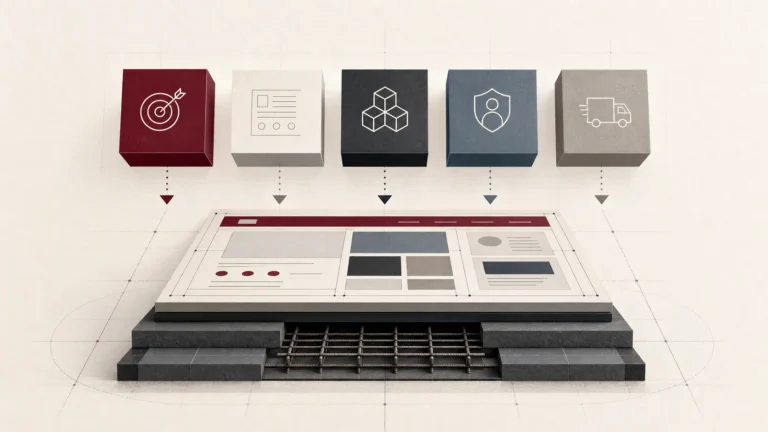
The technical scope is determined not by how much space a change occupies on screen, but by which parts of the system it affects. The content structure, page templates, front-end code, administration panel, data, functionality, connections with other systems and server requirements may all be affected to different degrees by the same change.
If the system is built with shared templates and reusable components, a change that appears on many pages may be made in one place. In a tightly coupled structure, or one in which pages were assembled separately, a change that appears small on screen may require work across many areas. Conversely, even if the content of hundreds of records changes, the software work may remain limited when the existing data structure and templates support the task.
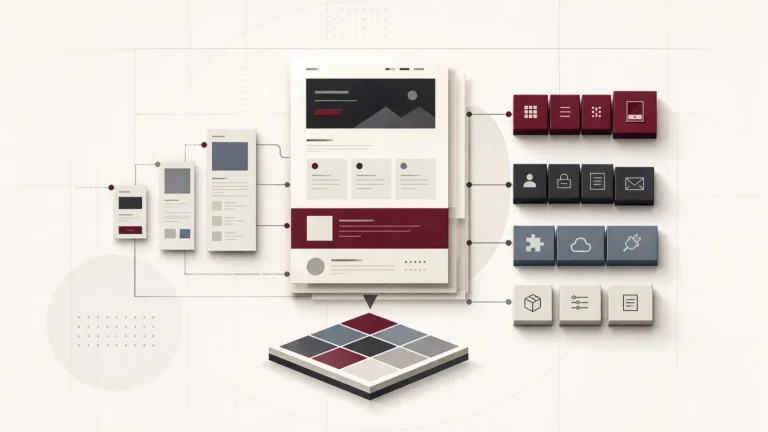
The available options do not form a fixed sequence from small to large. They may include a content or configuration update, development for a specific function, rebuilding one part of the website or broader redevelopment. The appropriate option can be assessed only after the affected areas and the connections between them are known.
Adapting the existing structure and developing a new one should not be compared on initial development time alone. Existing workflows, data migration, testing, launch, technical risks and future maintenance also matter. On some websites, adding an apparently limited requirement to an old structure may involve more work and risk than building a new structure that includes it. In other cases, adapting the existing structure may involve less work and less risk. The decision cannot be made without a technical review.
How are preservation and migration requirements determined?
Rebuilding a website does not mean keeping everything exactly as it is or discarding everything already there. The first step is to decide which content, data, functionality and accounts continue to hold value for the business. The project team then examines how they connect to the rest of the system, the consequences of changing or removing them and the available migration methods.
The same decision does not have to be made for every item. Content may be retained as it is, edited or removed if it is no longer required. Data may be migrated to the new system or archived according to retention needs. A function that still works may be retained in its existing form or rebuilt through a more suitable method. The domain name, business email, analytics and advertising accounts remain under the business’s control, although the way they connect to the new website may change.
The business decides what should continue after learning the technical implications. The project team explains why a particular piece of content, record, function or account may matter and sets out the consequences of preserving, migrating, rebuilding, archiving or removing it. The business may decide that an item is no longer required. That decision should be recorded clearly in the migration plan, with a backup taken where necessary and any connected areas checked.
Changing the content, purpose or address of a page may also affect existing links and search visibility. The pages that will continue, those that will change and what will happen to their old addresses should be considered before launch. Search engine access, page structure and the basic technical requirements are covered in What Is an SEO-Friendly Website?.
The migration plan should define not only what will move, but also how the new system will be checked. Before launch, checks should be planned to confirm that all required data is transferred, important actions work, account connections are correct and the old system is taken out of service at the appropriate time.
Conclusion
A website should not be rebuilt simply because it has reached a certain age. The need for change arises when the website no longer meets the business’s current needs or cannot support a required change in a suitable way. Whether the right response is a content update, limited technical work, partial redevelopment or a new website project cannot be known in advance.
The decision should be made after the capabilities and connections of the existing structure, the processes that must continue, migration requirements and future maintenance conditions have been reviewed. A rebuild is one possible outcome of that assessment, not its starting assumption.