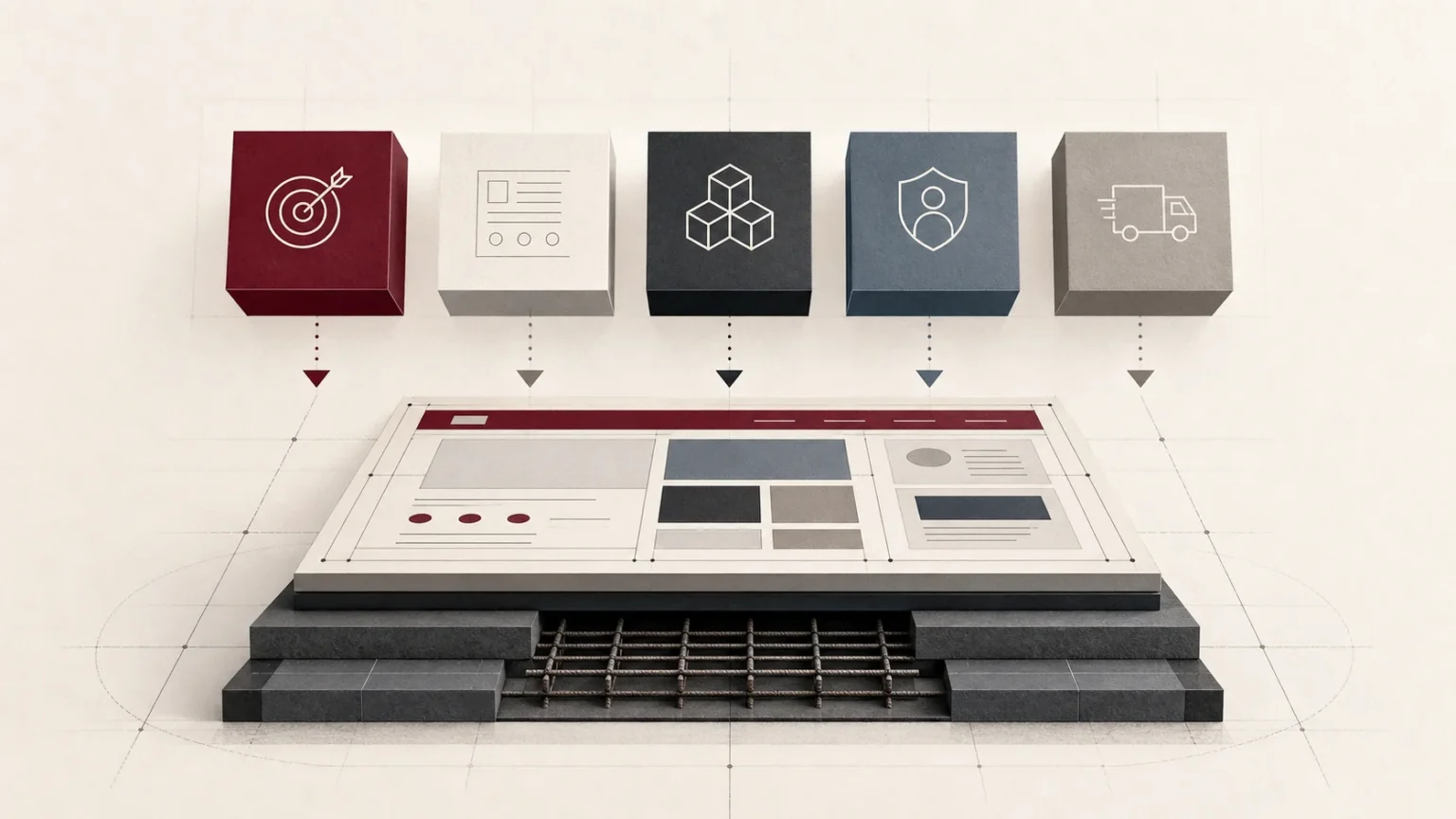
Before having a website built, you need to decide not only how it should look but also what it should do for your business. A website can explain your services, present your products, collect contact or proposal requests, accept reservations or sell directly online. Once its primary purpose is clear, the pages, content, functionality and technical solution can be planned accordingly.
You do not need to know every detail or choose the technology at the beginning of the project. Explaining your business objectives, your visitors’ needs, the content you already have, the actions the website must support and how you expect to use it after handover provides enough information for a productive start.
Stage 1 — Establish the website’s purpose and audience
Decide what the website’s primary role should be
The website may need to introduce your services, collect contact or proposal requests, present products, reduce repetitive questions received by the sales team, accept reservations or support online sales. It may have several roles, but deciding which one takes priority makes page and content decisions easier.
The primary role also indicates what should count as a meaningful result. A contact form, phone call, proposal request, reservation, purchase or document download may all be valuable to the business. Visitor and click numbers alone do not show whether the website is producing these results.
Consider why visitors come to the website
Different visitors may arrive for different reasons. One person may want to understand whether your service meets their needs. Another may want to examine products, request pricing or a proposal, make a reservation or contact the business directly.
Answer three questions for each important visitor group:
- Why is the visitor coming to the website?
- How will they reach the information or action they need?
- What result should this produce for the business?
The answers shape the navigation, page order, depth of content, calls to action and form fields.
Stage 2 — Plan the pages, content and functionality around actual needs
Build the page structure around needs, not convention
Home, About and Contact are common starting points, but the page structure should not be based only on a conventional list. You should consider which services or product groups need their own pages, how projects and references should be presented and which subjects should be supported with practical articles or guides.
If services, products, projects or articles will be added regularly, their shared structure can be planned from the beginning. This avoids recreating the page layout for every new entry and makes the website easier to manage over time.
Establish the state and ownership of the content
Copy, images, product information, project examples, company documents and contact details all affect the page structure and project timeline. Everything does not need to be ready at the beginning, but it should be clear which materials already exist and which still need to be prepared.
Preparing, editing, approving and entering content into the website are separate tasks. The following responsibilities should be clarified before the project begins:
- Which copy, images and information will your business provide?
- Which content will be prepared or edited as part of the project?
- Who will enter the content into the website?
- Who will conduct the final review and provide approval?
- If the website will use multiple languages, who will handle translation and language review?
The content may be prepared by your business or by the service provider. What matters is that its place within the project scope and the point at which it will be needed are made clear.
Describe functionality through the result you need
You do not need to describe functionality using technical terminology. Statements such as “visitors should be able to request a proposal,” “customers should be able to make a reservation” or “products should be available for purchase online” provide enough context to begin.
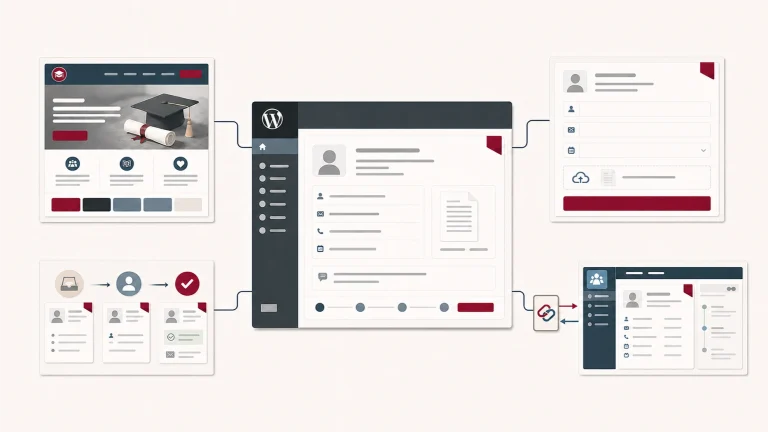
The requirement can then be translated into the steps visitors will follow, the information that must be collected, required notifications, management processes and any connections with other systems. The functionality should be described through the result it needs to provide for visitors and the business, not only by its name.
Consider what will need to be updated after handover
Services, products, projects, team information, articles and contact details may change over time. Content that will be updated regularly should have clear, purpose-built fields in the management panel.
During the project, you should establish who will update the content, whether different user permissions are required and whether training will be needed for the management panel. Routine content updates should also be separated from technical work that changes the page structure or website functionality.
Stage 3 — Evaluate the working process and project scope
Consider how the provider works as well as what is in the portfolio
A portfolio can give you an idea of a service provider’s visual approach and completed projects. However, it does not explain how projects are planned, how communication is handled or how the finished website is handed over.
Before requesting a proposal, it is useful to understand the answers to the following questions:
- How will the requirements and project scope be established?
- What main stages will the project go through?
- How will feedback and approvals be submitted?
- How will new requests or changes be handled?
- How will launch, handover and post-launch support be managed?
These questions help you evaluate not only the website that will be produced but also the working process used to reach that result.
Clarify the scope, responsibilities and revisions
The proposal should make the planned pages, functionality, content responsibilities, design and approval stages, third-party costs, launch tasks and handover scope understandable. Every detail does not need to be written in technical language, but it should be clear which work is included and who is responsible for it.
The number of review or revision stages should also be stated. Correcting an agreed section is not the same type of change as adding a new page or function that was not included in the original scope. You should know how changes to the scope will affect the timeline and price.
Submitting consolidated feedback through one communication channel reduces conflicting requests and unnecessary repetition. The project plan should also indicate when content, account access and decisions are required from your business.
For a more detailed explanation of how decisions about the project scope affect pricing, read What Determines the Cost of a Website?
Stage 4 — Plan account ownership and migration from an existing website
Clarify account ownership and access
Domain names, hosting, business email, analytics, advertising accounts, licenses and other services may be managed through different working arrangements. However, ownership, access, payment and handover conditions should be clear for every account.
It is especially important for the business to have sufficient management access to accounts involving its domain name, business email, business data and advertising budget. The following questions should be answered:
- In whose name will the account be opened, and who will manage it?
- What level of access will your business have?
- Who will monitor the initial payment and future renewals?
- Who will own the licenses and subscriptions?
- Which accounts, data and access details will be handed over when the project ends?
Updating this information whenever a new account or paid service is added makes it easier to retain access to accounts and data if the service provider changes later.
Prepare a migration plan for the existing website
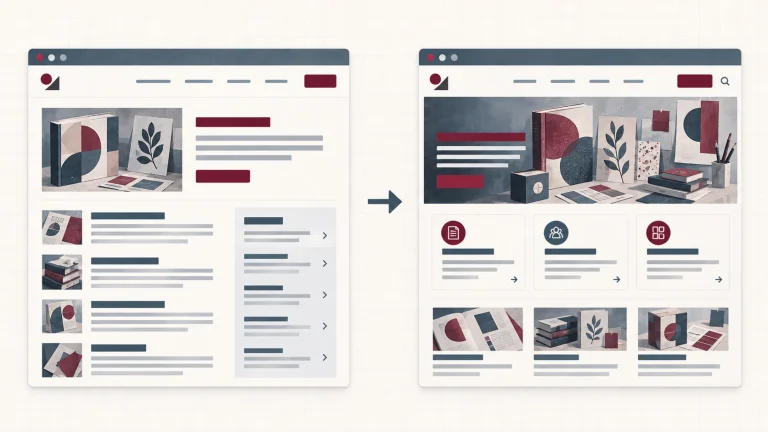
If the new website will replace an existing one, preparing the new design is not enough. The continuation of important content, records, page addresses, communication channels and measurement connections must also be planned.
The following points should be established before migration:
- Which content and records will be retained, edited or removed?
- Which existing page addresses will redirect to their new equivalents?
- How will forms, business email, analytics and advertising measurement be preserved?
- Which accounts and access details will be required for the migration?
- Who will check the migrated content and business information?
- Who will approve the launch of the new website?
The service provider can prepare the technical migration method. The account access, content decisions and approvals required from your business should be shown clearly in the project plan.
Stage 5 — Plan the timeline, handover and post-launch period
Do not treat the timeline as only a delivery date
The project may include stages such as establishing the requirements, planning the page structure, design, development, content entry, review, approval and launch. The timeline must account not only for design and development work but also for when content, account access, feedback and decisions will be required.
If the website needs to be launched before a particular event, campaign or product release, the target date should be shared at the beginning. If every part of the work cannot be completed by the same date, priority requirements can be included in the initial launch and the remaining work can continue in later stages.
Establish the launch and handover scope
Before launch, the agreed pages, functionality, forms, content and essential technical settings should be checked. If an existing website is being replaced, the launch should follow the migration plan prepared earlier.
For the technical and content foundations that should be checked before making the website available to search engines, read What Is an SEO-Friendly Website?
Handover means more than making the website available to visitors. Depending on the project scope, the following items may be handed over:
- Management panel and service account access
- Domain name, hosting and related service information
- Licenses and renewal information
- Agreed project files and data
- Required backups
- Management panel training or usage instructions
The proposal should state which files and data will be delivered, the applicable usage or licensing rights, the format in which they will be shared and the access permissions involved.
Plan post-launch support
The communication process and initial support period should be established in advance so you know what to do if a problem related to the completed project work is discovered after launch.
Ongoing requirements such as software and security updates, hosting support, new pages or functionality, content entry, SEO and advertising management may be included in the project price or planned as separate services. Included support should be clearly separated from work that will be priced later.
Preparing for the project proposal discussion
You do not need to prepare a technical document or finalize the complete page list before the discussion. Bringing together the following information provides enough context for an initial evaluation:
- A short explanation of what your business offers
- The primary need you expect the website to meet
- Whether a new website will be created or an existing one will be replaced
- Who will use the website and which actions they should be able to complete
- The main products, services or information that will be presented
- Existing copy, images, logos and brand identity files
- Existing content and functionality that must be retained or migrated
- The people who will participate in communication, reviews and approvals
- Any target launch date and why that date is important
- Any available budget range or work that should be prioritized
Not every point needs to be finalized before the first discussion. Unknown or undecided matters can be addressed while the project is being evaluated.
Begin the website project by clarifying your requirements
You do not need to make every technical decision or prepare a detailed project plan by yourself before having a website built. Explaining what your business offers, what you expect from the website, the materials you already have and any important project conditions provides enough information to establish the appropriate scope.
If you are planning a new website or replacing your existing one, explore our Web Design and Development service.