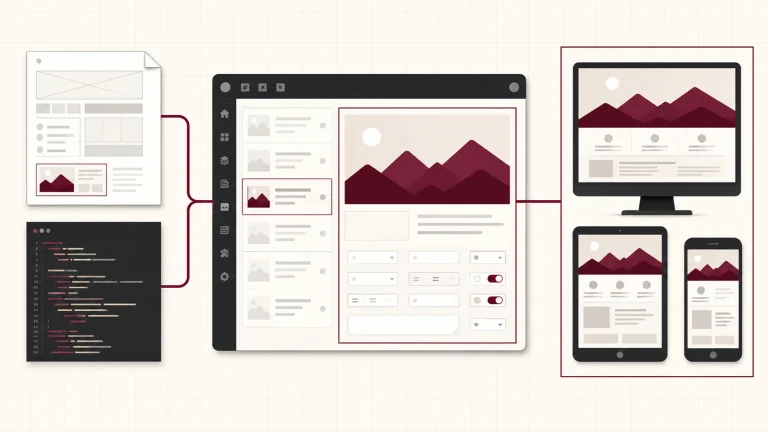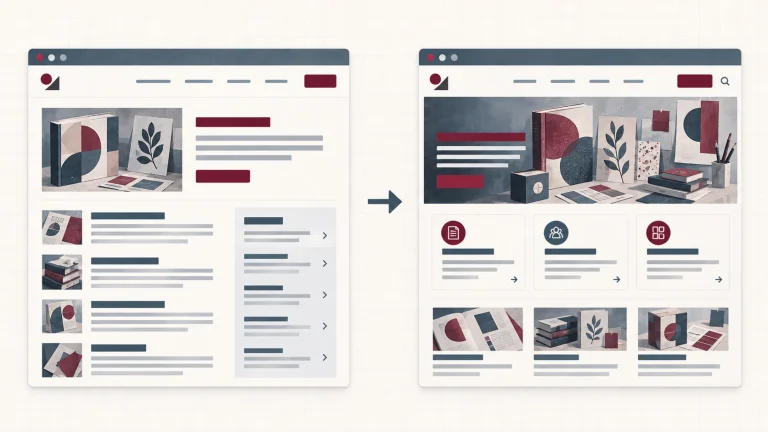

Businesses are often presented with two choices for a website. They can choose a platform-based website, which is usually faster and less expensive to build and launch, or invest in a custom-developed website that offers more freedom and a closer match to their needs but requires more time and a larger budget.
This is a useful starting point, but it leaves out the most important question: which approach will work better for this business over time? The differences may be technical, yet the decision is at least as much a business question, perhaps more so.
A platform-based website can be the right choice when it supports the business in the way the business needs. It can become costly when important requirements fall outside the way the underlying platform was designed to work. A well-built custom-developed website can match those requirements more closely and provide greater control, but that control takes more time and money to create and maintain.
There is also a third approach that combines the two. An existing platform can handle common website needs, while custom development covers the parts that fall outside its standard capabilities. The result is a hybrid website. Understanding all three approaches helps a business choose according to its current needs, future plans, budget, and situation.
What is a platform-based website?
In this article, a platform-based website means a website created mainly through the standard capabilities of an existing website platform, rather than having its core capabilities developed specifically for one business. These platforms are built to meet the common needs of a broad user base, so each business chooses from the design options, management tools, and functions already available within a predefined, standardised structure. Typical examples include websites that rely mainly on the standard capabilities of Wix, WordPress, or Shopify.
For example, the website may support publishing information, receiving enquiries, showing a catalogue, taking bookings, or selling online. These are only familiar examples, not a complete list. What makes the website platform-based is that the platform provider has already decided how its standard functions work and how far they can be changed.
The website still needs planning, content, design work, setup, and testing, so “platform-based” does not mean that the whole website is already finished. The difference is that many needs can be met through predefined tools and settings with less technical work.
What do platform-based websites do well?
When the business’s needs match the platform, much of the basic development has already been done. The website can usually be launched sooner and at a lower starting cost, while the platform may also give staff a familiar way to manage it and a clear process for updates and support.
This approach works well when the business can follow the platform’s standard way of working for its needs. If greater freedom would have no practical use, there is little reason to incur the time and financial cost of it.
A platform-based website can also be a practical way to test a new idea or meet a short-term need. When the website is not expected to remain in use for long or be developed further, launching a minimal website quickly may matter more than long-term flexibility.
Where do their limits begin to matter?
The same decisions that save time also create the platform’s limits. If an important business need does not fit, the business must accept the restriction, change the way it works, or add another solution. One or two supported additions may solve the problem cleanly, but a growing collection of subscriptions, manual steps, and poorly connected tools to circumvent limitations can make a cheap start a costly burden to run.
Future plans therefore matter. A platform that fits today may not support the business when it adds new services, enters another market, changes how staff manage the website, or needs to connect another system. These are examples rather than a complete list; the key point is that the platform provider controls what the platform-based website can do. If an important change is not supported, the business may have to accept a poor solution or move to another system.
Every system has limits, but the business should know whether the limits of the chosen platform are likely to block a change it genuinely expects to make for future business benefits.
What is a custom-developed website?
A custom-developed website starts with the needs of the business. Its design, the part staff use to manage it, the capabilities it provides, and its connections with other systems are all planned for the project specifically.
This does not mean rebuilding every part. Existing services can still handle common tasks or work that belongs in a separate specialist system; the difference is that the important decisions about how the website itself works are made for this project.
What can custom development improve?
The main benefit is a closer match. The website can explain the business in a way that makes sense to its customers, support the capabilities the business needs in the shape it needs them, and give staff a clear way to manage the right information.
This matters most when the website supports an important part of the business. It may need, for example, to collect useful information from potential customers, explain a complex service clearly, pass information into another business system, or manage the complete process itself. These are illustrations rather than a checklist; the main point is that the website can follow the business need instead of forcing that need into a fixed platform.
Custom development also gives the business more control over future changes. If likely changes are discussed early, later work can add to the existing website instead of requiring its replacement. The website can be prepared for this even when the future requirements are not yet fully clear.
No one can predict every future need, nor is that the aim. The aim is to preserve the core structure and accumulated data while leaving suitable areas where new parts can be added more easily.
What does custom development cost?
Custom development requires more planning, design, development, and testing, so it usually takes longer and costs more at the start than creating a website through an existing platform. These are the normal costs of creating something tailored for one’s needs.
More control is useful only when the business will benefit from it. Building for changes that are very unlikely can waste time and money, which is why a good custom project separates changes the business truly expects from ideas that may never happen.
Maintenance, ownership, and support must also be clear. The business should know who will maintain the website, which outside services it uses, what will be delivered, and how later changes will be handled. Calling a website “custom” does not answer these questions; the project agreement must answer them.
When is custom development worth the investment?
Custom development is most useful when a closer match can improve an important result, remove a serious limit, or ease scaling later on. The website may support sales, applications, customer service, information management, or connections with other systems. What matters is how much the business depends on the website for its core functions and revenue.
It is also easier to justify when important changes are likely. A business that expects its website to grow and expand its capabilities has a stronger reason to control how that growth will be handled.
Can a platform-based website include custom development?
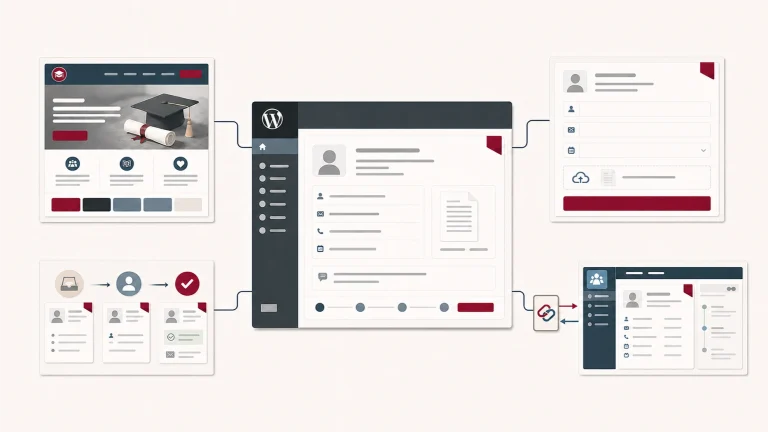
Many projects use an existing platform for common website needs and custom development for the parts that need to work differently. In this article, we call the result a hybrid website.
Connections with other software are one common reason a website becomes hybrid. A business may already use a separate system for payments, bookings, recruitment, customer management, or another task. If a platform-based website can work with that system in the required way, the project can remain mostly standard.
If the underlying platform does not support the connection, a custom connection may be required. Custom work may also be needed for reasons unrelated to other software, such as when the business requires a capability the platform does not provide or needs an existing capability to work differently or be extended. In any of these cases, the website is no longer purely platform-based; it has become a hybrid website.
Not every website platform permits this type of work. Some are highly restrictive, while others are more accommodating to custom development. The limits of a hybrid website therefore still depend on its underlying platform.
A fully custom-developed website can account for these needs from the start, but it must still follow the rules of the other systems it connects to and of the technologies it uses. Those rules are not usually as firm as the limits predefined by the platform underlying a platform-based website.
When creating a hybrid website, the platform’s common management capabilities do not need to be rebuilt; custom development can be applied where different behaviour has value. Both the underlying platform and the custom parts, however, must be maintained as the website changes. That responsibility does not disappear completely even in websites that appear entirely platform-based.
Customised WordPress solutions show this wide range clearly. At one end, a WordPress website may use third-party ready-made themes and plugins without containing a single line of custom code. At the other end, WordPress may provide only the basic infrastructure, while every website-specific part is developed with custom code. In the second case, WordPress is used more as a development platform than as a ready-made content management system.
Why do future plans change the real cost?
The cost of a website does not end when it is launched, because the approach chosen at the start also affects the cost of later changes or simple maintenance. A website is more like a physical store, but for the digital world; hence, future plans are important for all three approaches.
A platform-based website can stay affordable for years while the underlying platform continues to meet the business’s needs. When the gap between the business’s needs and the platform’s capabilities grows, or the demands placed on the platform begin to exceed what its general-purpose design handles well, its initial cost advantage may gradually shrink.
When a platform-based website no longer fully meets the business’s needs, additional subscriptions may be purchased, some work may be handled manually, or the same information may be kept in several places. These measures may keep the website usable for longer, but they do not remove the underlying platform limits. If the business eventually has to move to another system, much of the money and effort spent on those temporary measures will not contribute to the replacement. A low starting cost can therefore become a higher total cost over time.
Changing systems costs more than the price of the new website. Existing content and business information may need to be organised and moved, and connections with other systems may need to be rebuilt. Search rankings, existing links, visitor tracking, and the way customers use the website may also need to be protected during the move. Staff may have to learn a new way to manage the site, while the business must manage the risk and disruption of replacing a live system. Together, these create a transition cost in addition to the cost of developing the replacement website.
Custom development can reduce this risk when expected changes are considered from the start. Later work can add to the existing website instead of replacing it. Building for every possible idea, however, can raise today’s cost without giving the business a useful return.
A hybrid website can balance the two approaches. The underlying platform handles common needs, while areas expected to change or expand are addressed through custom development. Its long-term cost still depends on whether the platform and custom parts can continue to work together.
The business does not need to predict everything. It needs to identify the changes it has a real reason to expect and decide how much flexibility may be worth paying for now. The company developing the website is responsible for determining how those expected changes should be supported technically.
How should a business choose?
The business owner should not need to choose technical tools. The process should begin by defining what the website must achieve, after which the business can separate the areas where a standard way of working is acceptable from those where a limit would cause a real problem.
The next question is how the website is expected to change. If it is likely to stay stable and the business’s needs fit an existing platform, the faster launch and lower starting cost of a platform-based website may be more useful than extra control or performance. If the website supports important business work or is expected to expand and scale, what areas might hit limits in the future?
The proposal should also explain the long-term responsibilities, including later costs, outside services, ownership and access, maintenance, support, what happens when the current system can no longer support a needed change, and whether the collective cost of subscription-based ready-made services would be cheaper than the upfront cost of custom development.
The aim is not to plan every capability, but to judge whether saving money today is likely to create an expensive problem later and whether paying for more control now has clear business value later on.
For a wider preparation framework covering objectives, content, functions, account ownership, and delivery, see What to Consider Before Having a Website Built. For the factors that shape project investment, see What Determines the Cost of a Website?
Conclusion: Choose the investment that fits the business
A well-built custom-developed website can match a business’s needs more closely and give it more control than a platform-based website. Its real disadvantage is the extra time and money needed to plan, build, test, and maintain something made for one business.
Not every business needs to pay that price. When the business’s requirements fit an existing platform and the business is unlikely to outgrow its technical limitations, a platform-based website can provide the needed result sooner and at a lower starting cost. When a closer match, connections with other systems, or future changes are important, custom development may provide better value over time, while a hybrid website can be useful when the business needs both standard functions and a limited amount of custom capabilities.
The right choice depends on where the business needs more control, which limits it can accept, and how likely it is to need further changes.
At TBA Yazılım, we first look at what business requirements a website must fulfil and what the possible future changes are, and plan accordingly with our customers.
If you are planning a new website or reconsidering an existing one, you can review our Website Design and Development service or tell us about your project.